
Packaging and Kitting: What Publishers Should Plan for Beyond the Printed Page
Read Time 6 mins
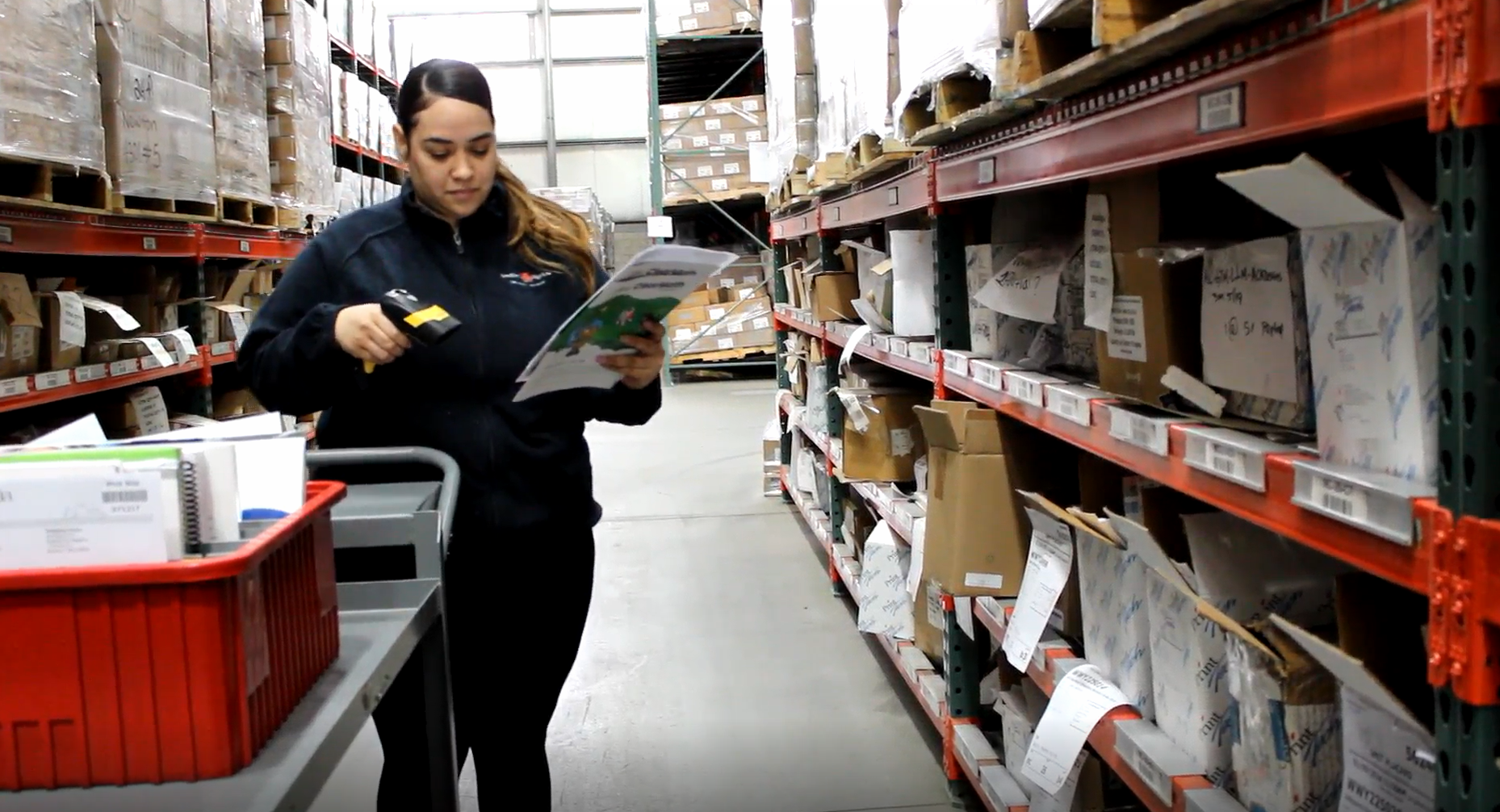
For established publishing programs, the production conversation rarely ends with the printed book. Once a title becomes part of a larger product offering, the way it is packaged, assembled, stored, and distributed can have as much operational impact as the print specification itself. This is particularly true for educational programs, subscription offerings, and businesses selling through multiple channels where a finished product may consist of several components and reach customers through very different distribution models.
The complexity tends to increase as a catalog grows. Multiple editions, grade levels, language versions, teacher and student components, seasonal configurations, or channel-specific bundles each introduce another variable into inventory planning and fulfillment.
Packaging and kitting decisions, therefore, should not be viewed simply as warehouse tasks. They are part of the product and supply chain strategy, affecting inventory investment, handling costs, order accuracy, shipping efficiency, and how quickly an organization can respond to demand.
Packaging Decisions Have Supply Chain Consequences
Packaging is often finalized after the product itself has been defined. For established operations, it is worth looking at the relationship in the opposite direction as well. Carton dimensions, pack quantities, unit weights, pallet configurations, and protective requirements can all influence how efficiently inventory moves through the supply chain.
A product that is efficient to manufacture may not be efficient to ship or store. A small change in pack quantity can affect carton utilization and pallet configuration. A different packaging format may reduce damage during transit or make individual fulfillment more efficient. For products shipped in volume to schools, distributors, or other institutional customers, those decisions can have a measurable effect on handling and transportation costs.
The important consideration is total cost rather than packaging cost in isolation. A packaging choice that adds a few cents to each unit may make sense if it reduces damage, handling, repacking, or freight costs downstream. Conversely, a packaging format that looks economical at the unit level can create additional labor or storage requirements later in the process.
Kitting Gets More Complicated as the Catalog Grows
Kitting can be straightforward when every kit contains the same components. It becomes a significantly different operational challenge when an operation has multiple configurations that share some components while requiring others to remain distinct.
Consider a curriculum program with several grade levels. The core components may be printed in large quantities, while teacher materials, assessments, inserts, or supplemental products vary by grade. The operation now has to manage not only the individual inventory items, but also the relationships between those items and the finished kits. Forecasting demand for one component may need to account for its use across several finished products.
The same complexity shows up well beyond curriculum. A faith-based publisher may pair a shared leader guide with grade-specific study booklets and take-home materials. A trade publisher assembling a boxed set may pair shared packaging with individual titles that vary by volume. A higher education program may pair a core lab manual or workbook with course-specific supplements. In each case, the operation is managing the same underlying problem: shared components, variable components, and the finished configurations that combine them.
This is where inventory visibility becomes important. A fulfillment partner should be able to track component-level inventory as well as finished kits, manage multiple configurations, and provide accurate visibility into what is available to assemble and ship. Otherwise, there can be sufficient total inventory on paper while a particular configuration remains unfulfillable because one required component is unavailable.
There is also a strategic question around when to kit. Pre-assembling everything may simplify fulfillment and create a finished SKU that is ready to ship. Delaying assembly can preserve flexibility when the same components serve multiple products or channels. The right approach depends on demand predictability, storage requirements, labor, and how frequently configurations change.
Consider Where Inventory Should Become a Finished Product
One of the more important decisions is determining at what point inventory should transition from individual components into a finished product. For highly predictable demand, assembling kits in advance may make sense. It can reduce fulfillment touches and provide ready-to-ship inventory during peak periods. For products with uncertain demand or several possible configurations, keeping components separate longer may provide more flexibility and reduce the risk of creating inventory that cannot be easily repurposed.
This is particularly relevant for seasonal or academic-year demand. Building thousands of finished kits too early can tie up warehouse space and working capital. Waiting too long can create a labor bottleneck when order volume increases. The optimal point is rarely determined by printing cost alone. It depends on the relationship between production schedules, inventory turns, labor capacity, storage, and anticipated order patterns.
A capable supply chain partner should be able to have that conversation rather than simply asking how many finished kits need to be assembled.
Distribution Channels Can Change the Packaging Requirement
The same product may require different handling depending on where it is going. A distributor shipment may be optimized around case quantities and pallet efficiency. A school district order may contain several SKUs that need to remain together. A direct-to-consumer order may require individual packaging and a different level of protection.
For organizations selling through multiple channels, this creates an important distinction between the product itself and the way that product is prepared for fulfillment. The physical inventory may be identical, while the packaging and fulfillment requirements differ considerably.
Planning for these differences upfront can reduce unnecessary touches. If inventory has to be unpacked, sorted, regrouped, and repacked every time the distribution channel changes, the organization is effectively paying for the same handling multiple times. Packaging and kitting processes should support the distribution strategy rather than forcing the distribution strategy to work around the packaging process.
SKU Management Is Part of the Equation
Packaging and kitting decisions also need to be evaluated against SKU proliferation. Creating a finished kit can simplify ordering and fulfillment, yet every finished configuration may become another inventory item to track.
For catalogs with numerous products and configurations, this creates a tradeoff between customer convenience and inventory flexibility. A single kit SKU may make ordering easier for a school or customer, while component-level inventory may give the operation greater flexibility across channels and programs.
That makes SKU strategy worth discussing alongside kitting strategy. Teams should understand how finished kits will be represented in the warehouse system, how component inventory is allocated, how assembled inventory is reconciled, and how changes to a kit configuration are managed. These details may not be visible to the end customer, yet they can have a significant effect on operational efficiency.
Questions to Ask Your Printing and Fulfillment Partner
If packaging and kitting are becoming a larger part of the operation, the right questions go beyond whether a supplier offers those services. The goal is to understand how those capabilities fit into the broader production and inventory model.
-
How do you handle component-level inventory?
Can the partner track the individual components that make up a kit, or is inventory visibility limited to finished products? This matters when the same component is used across multiple configurations. - Can you manage multiple kit configurations?
Ask how the operation handles products with shared components, different editions, changing configurations, or channel-specific versions. The more complex the catalog, the more important this becomes. - When would you recommend assembling kits?
A good partner should be able to discuss the tradeoffs between pre-assembly and assemble-to-order based on demand patterns, storage, labor, and inventory flexibility. - How are packaging specifications developed?
Ask whether packaging decisions are based on the finished product alone or whether cartonization, pallet utilization, shipping requirements, and handling are considered as part of the process. - How do you manage changes to a kit or packaging configuration?
Find out how revisions are controlled and how the operation prevents older and newer versions from being mixed. - What quality controls are in place during kitting?
Ask how components are verified, how finished kits are checked, and how errors are identified before orders leave the facility. - How does your system connect production, inventory, kitting, and fulfillment?
The more hand-offs between systems and suppliers, the more opportunities there are for information to become disconnected. Understanding how inventory moves through the operation can reveal potential bottlenecks before they become problems. - Can the same inventory support multiple distribution channels?
If products move through distributors, schools, retailers, and direct channels, ask how different order and packaging requirements are managed without creating unnecessary repacking or duplicate inventory. - How are labor and handling costs calculated?
Kitting is not simply a per-unit activity. Component handling, staging, assembly, packaging, labeling, storage, and order fulfillment can all contribute to the total cost. Understanding the complete cost structure provides a more useful comparison between approaches.
Look at the Entire Cost of Getting the Product Out the Door
The cost of a finished product is not limited to paper, ink, binding, and manufacturing. Once packaging, storage, assembly, handling, and fulfillment are included, the operational model can look very different.
The most useful comparison is often the total cost and complexity of the process.
-
How many times does inventory need to be handled?
-
How many facilities does it pass through?
-
How much storage does each configuration require?
-
Where are the labor-intensive steps?
-
How much flexibility is lost when components are assembled too early?
-
What happens when demand changes?
Those questions provide a much better basis for evaluating a packaging or kitting strategy than simply comparing the quoted cost per kit.
At Bradford & Bigelow, packaging and kitting are part of a broader set of services that includes printing, warehousing, inventory management, pick and pack, and distribution. For programs that extend beyond a single printed book, bringing those functions together can reduce hand-offs and give production and fulfillment teams a more connected view of the inventory moving through the supply chain.
The goal is not simply to put more services under one roof. It is to create a production and fulfillment model that works as the program grows, accommodates changing demand, and moves the right combination of products to the right customer with as little unnecessary handling as possible.