
Offset vs. Digital Printing: A Decision Guide for Educational Publishers
Read Time 7 mins
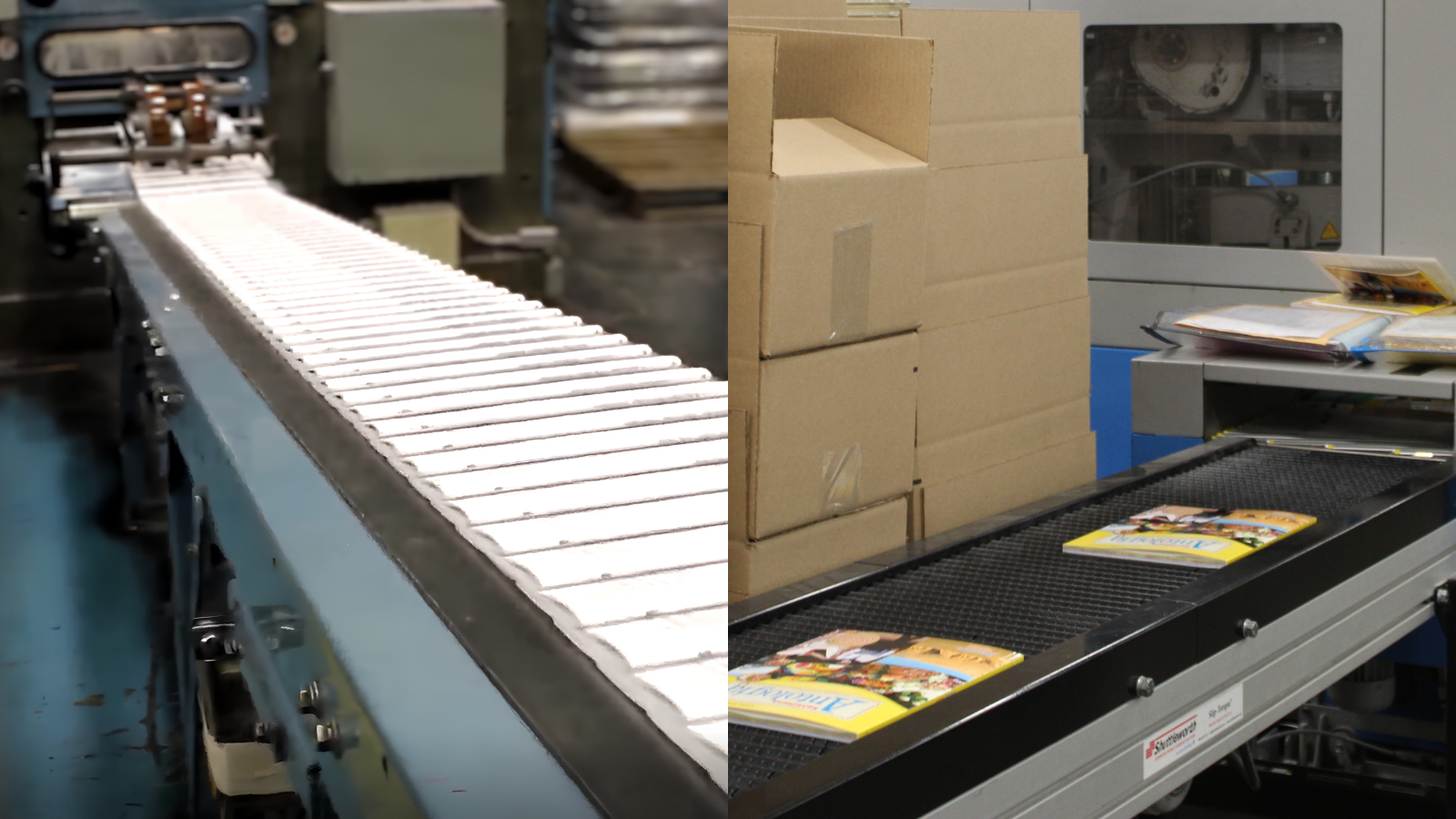
If you manage print for educational publishing, you are making the same call over and over again. Should this title run offset or digital?
It is not just a technical choice. It affects cost, timelines, inventory, and how flexible you can be when content changes. The good news is that the gap between the two technologies has narrowed, and the better news is that each still has clear strengths when used in the right scenario.
This guide breaks down the decision in practical terms so you can match the right method to the right project.
The short version
If you need a quick gut check:
-
Offset printing is built for longer runs, lower unit costs, and consistent quality at scale
-
Digital printing is built for short runs, speed, and flexibility
Most projects fall somewhere in between and that's where the real decision happens.
Print quality: the gap has closed but not disappeared
Digital print quality has improved dramatically. Modern systems like the HP Indigo and Screen Truepress produce clean text, solid fills, and increasingly strong image reproduction. For many educational products, especially K/K or lightly illustrated interiors, digital quality is more than sufficient.
That said, offset still has advantages in certain areas. On web offset platforms like Manroland and Timsons, you will typically see:
- Smoother gradients
- More consistent solids across long runs
- Greater control over ink laydown on different paper types
- Strong performance on high page count signatures
For highly illustrated textbooks or color-critical work, offset still has an edge. For most standard educational interiors, the difference is no longer the primary driver.
Quantity economics: where offset pulls ahead
This is where the distinction becomes clear. Digital printing has a relatively flat cost structure. Each additional book adds a similar, incremental cost.
Offset printing has a higher upfront setup cost but a much lower cost per unit once the press is running, which creates a crossover point.
For many educational titles, that crossover typically falls somewhere between 2,500 and 7,500 copies, depending on page count, format, and color. Below that range, digital is often more cost-effective, and above that range, offset usually delivers a lower unit cost.
For a 144-page workbook, once you move into the 5,000-plus range, offset often becomes the more economical choice.
This is why adoption-based publishing programs and high-volume backlist titles are strong candidates for offset.
Turnaround time: speed vs. scale
Digital printing is fast to start. With no plates or makeready required, files can move from approval to production quickly. That makes it ideal for:
- Tight deadlines
- Last-minute changes
- Short-run replenishment
Offset takes a bit longer upfront. There is prepress, plating, and press setup to consider, but once the job is running, it moves quickly at scale. For more long-run educational jobs, the total turnaround is still four weeks or less from final files to delivery when planned properly.
So the real difference is not just speed, it is speed to first copy versus speed at volume.
Versioning and flexibility
This is where digital printing clearly stands out. Digital makes it easy to:
- Print multiple versions of the same title
- Customize content by region or district
- Update files between runs without added setup cost
- Print in smaller batches as demand evolves
For higher ed course packs, customized learning materials, or faith-based programs with localized content, this flexibility is valuable.
Offset is less flexible once the job is on press. Changes require new plates and setup. That makes versioning more complex and better suited to stable content.
If your content is still evolving or frequently updated, digital often makes more sense.
Inventory strategy: print and store vs. print on demand
Your printing method directly impacts how you manage your inventory.
Offset model: print long, store smart
Offset typically supports a print-to-inventory model. You produce a larger quantity, store it, and fulfill orders over time. Benefits include:
-
Lower unit cost
- Fewer reprints
- Stable supply during peak demand
Challenges include:
-
Warehousing costs
- Risk of overprinting
- Tied-up cash
This model works best when demand is predictable.
Digital model: print what you need
Digital supports a short-run or print-on-demand approach. You print smaller quantities more frequently. Benefits include:
-
Lower inventory risk
- Reduced storage needs
- Ability to update content between runs
Challenges include:
-
Higher unit cost
- More frequent production cycles
This model works well when demand is uncertain or content changes often.
Real-world scenarios
Here is how this plays out across different types of educational publishing.K-12 Publishers
Scenario 1: district-adopted workbook
- Print run: 15,000 copies
- Stable content for multiple years
Best fit: offset. Lower unit cost and efficient large-scale production.
Scenario 2: supplemental practice book
-
Print run: 1,500 copies
-
Content may be updated annually
Best fit: digital. Flexibility and lower risk of leftover inventory.
Faith-Based Publishers
Scenario 1: core curriculum title
- High, consistent demand
- Long lifecycle
Best fit: offset. Economies of scale and consistent supply.
Scenario 2: seasonal or program-specific materials
- Smaller, variable runs
Best fit: digital. Reduces overprint risk and supports flexibility.
The hybrid approach
Many publishers today use both. A common strategy looks like this:
-
Use digital for initial runs or uncertain demand
-
Shift to offset once volume stabilizes
-
Use digital for backlist replenishment
-
Use offset for core high-volume titles
This approach balances cost efficiency with flexibility.
Choosing the right partner matters
Technology is only part of the equation. The real value comes from working with a partner who can guide you across both print methods and help you choose the right one for each project.
Bradford & Bigelow supports both long-run offset and short-run digital production with web offset platforms like Manroland and Timson, alongside digital solutions like HP and Screen. That means decisions can be based on what is best for the project, not limited by a single capability.
What this means for your next project
There is no single right answer for offset versus digital, as the right choice depends on:
- Quantity
- Timeline
- Content stability
- Versioning needs
- Inventory strategy
When those factors are clear, the decision becomes much easier. Offset delivery efficiency at scale while digital delivers speed and flexibility.
Most publishers benefit from using both strategically.