
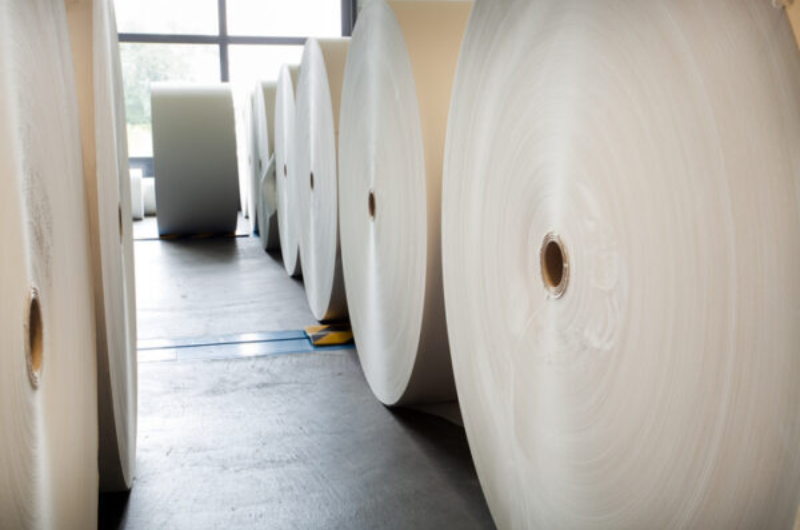
Paper selection can have a bigger impact on your project than many people realize. It affects print quality, page count, bulk, shipping weight, durability, and, of course, overall cost. For publishers managing educational products, the right paper can help a book perform better in the classroom while keeping production on budget.
The challenge is that there is no single best paper for every title. A full-color workbook has different needs than a black-and-white math practice book. A softcover student edition may need something different than a case-bound teacher's edition that has to hold up for years.
This guide walks through the key paper decisions production teams make when planning a long-run offset project and how to think about those choices strategically.
Start with the end use
Before looking at basis weights or finishes, start with one question:
How will the book be used? Think about:
- Will students write in it
- Is it heavily illustrated
- Does it need to feel substantial
- Will it be used daily for multiple school years
- Is mailing or freight cost a major factor
The answers usually point you in the right direction.
Understanding text weight: 50# vs. 60# text
One of the most common choices in educational publishing is between 50# and 50# text stocks.
50# text - this is a lighter sheet often used when page count and freight matters.
Benefits include:
- Lower paper cost
- Lower shipping weight
- More pages per inch which can reduce spine width
Best for:
- High page count books
- Budget-sensitive programs
- K/K interiors
Potential tradeoff:
- Slightly less opacity depending on the sheet
- Lighter feel in hand
60# text - this is a heavier sheet that offers a more substantial feel and often improved opacity.
Benefits include:
- Better resistance to showthrough
- Stronger page feel
- Often preferred for premium products
Best for:
- Workbooks that students handle frequently
- Full-color products
- Teacher editions and reference materials
Potential tradeoff:
- Higher paper and freight cost
- Fewer pages per inch which can increase spine size
Why brightness matters
Brightness refers to how much blue-white light a paper reflects. Higher brightness generally creates a cleaner and whiter appearance. This can affect how printed content looks:
- Higher brightness helps images pop and gives sharper contrast for black text
- Moderate brightness can feel softer and easier on the eyes for long reading sessions
For educational materials, brightness is often a balancing act between visual appeal and reading comfort. For example:
- A colorful workbook may benefit from a brighter sheet
- A text-heavy teacher guide may not need the highest brightness available
Coating types: uncoated vs. matte
The surface finish of the paper changes both appearance and usability.
Uncoated papers have a natural surface with more texture.
- Easier to write on with a pencil or pen
- Less glare
- Familiar book-like feel
Best for:
- Practice books
- Workbooks with student write-in areas
- Teacher manuals with notes and annotations.
Matte-coated stocks offer a smoother surface with a muted sheet.
Benefits:
- Better image reproduction than uncoated
- Softer look and less glare than gloss
Best for:
- Full-color educational books
- Illustrated workbooks
- Covers or inserts where image quality matters
Opacity and showthrough
Opacity is one of the most important but least discussed paper traits. It measures how much the sheet prevents printing on one side from showing through to the other side. Low opacity can create distractions, especially in educational content with:
- Dense text
- Math problems
- Finelines
- Answer spaces
This is why opacity matters so much for K/K workbook interiors. A lighter sheet may save money but if equations or grids show through from the back side, usability suffers. High opacity stocks often make sense when clarity is critical.
Matching paper to the product
Full-color illustrated workbook. Think science programs, reading programs, or younger learner materials with diagrams and photos. Recommended priorities:
- Strong print surface
- Good brightness
- Reliable opacity
- Durable feel
Often, a 60# matter or quality uncoated text is a smart fit depending on write-in needs. If students need to write heavily in the book, uncoated may win. If visuals drive learning, matte may be the better choice.
Black math practice book. This product is about function, readability, and cost control. Recommended priorities:
- Good opacity
- Clean text reproduction
- Writability
- Efficient freight weight
Often a 50# or 60# uncoated text is ideal, depending on page count and budget. For very high page count programs, 42.5# or 50# can be an efficient solution if opacity remains strong.
Case-bound teacher's edition. Teacher editions need durability and often carry higher page counts. Recommended priorities:
- Strong feel
- Good bulk and spine presence
- Readability
- Long-term handling performance
Often, a 60# uncoated or matte text is a strong choice depending on the content mix. If charts and color tabs are important, matte may make sense. If note-taking matters, uncoated is often preferred.
How paper impacts cost
Paper is one of the largest variables in any print estimate. Moving from 50# to 60# increases material cost and freight weight. Moving from uncoated to coated stocks can also increase cost. Higher brightness and premium grades may add additional expense.
That does not mean that higher cost is wrong but it means the paper should match the purpose of the project. If a more premium sheet improves classroom use, durability, or visual learning outcomes, it may be worth every penny.
How paper impacts shipping and handling
Heavier paper means heavier cartons and higher freight costs. Across a run of 25,000 copies, even modest weight changes can materially affect shipping spend. This is especially important for:- National distribution
- Multiple warehouse drops
- Direct-to-school shipments
Sometimes the smartest paper decision is not just about printing, it is about logistics.
Work with what is proven
Many long-run offset printers maintain house stocks that are already tested for runability, consistency, and availability. That can help reduce risk, shorten lead times, and keep pricing more competitive.
Bradford & Bigelow maintains a range of web offset house stocks for educational publishing, including multiple text weights, brightness levels, and finishes suited for different applications.
For production teams, that means faster decisions and fewer surprises.
Final thoughts
The best paper choice is rarely the most expensive or the cheapest; it's the one that fits the product.
A math workbook needs usability and value. A full-color science book needs image performance. A teacher edition needs durability and readability.
When the paper choice aligns with the purpose of the book, everything else works better. That includes print quality, shipping efficiency, classroom performance, and total project cost.