
What Tariffs Mean for Educational Publishers & Why Domestic Printing Matters
Read Time 6 mins
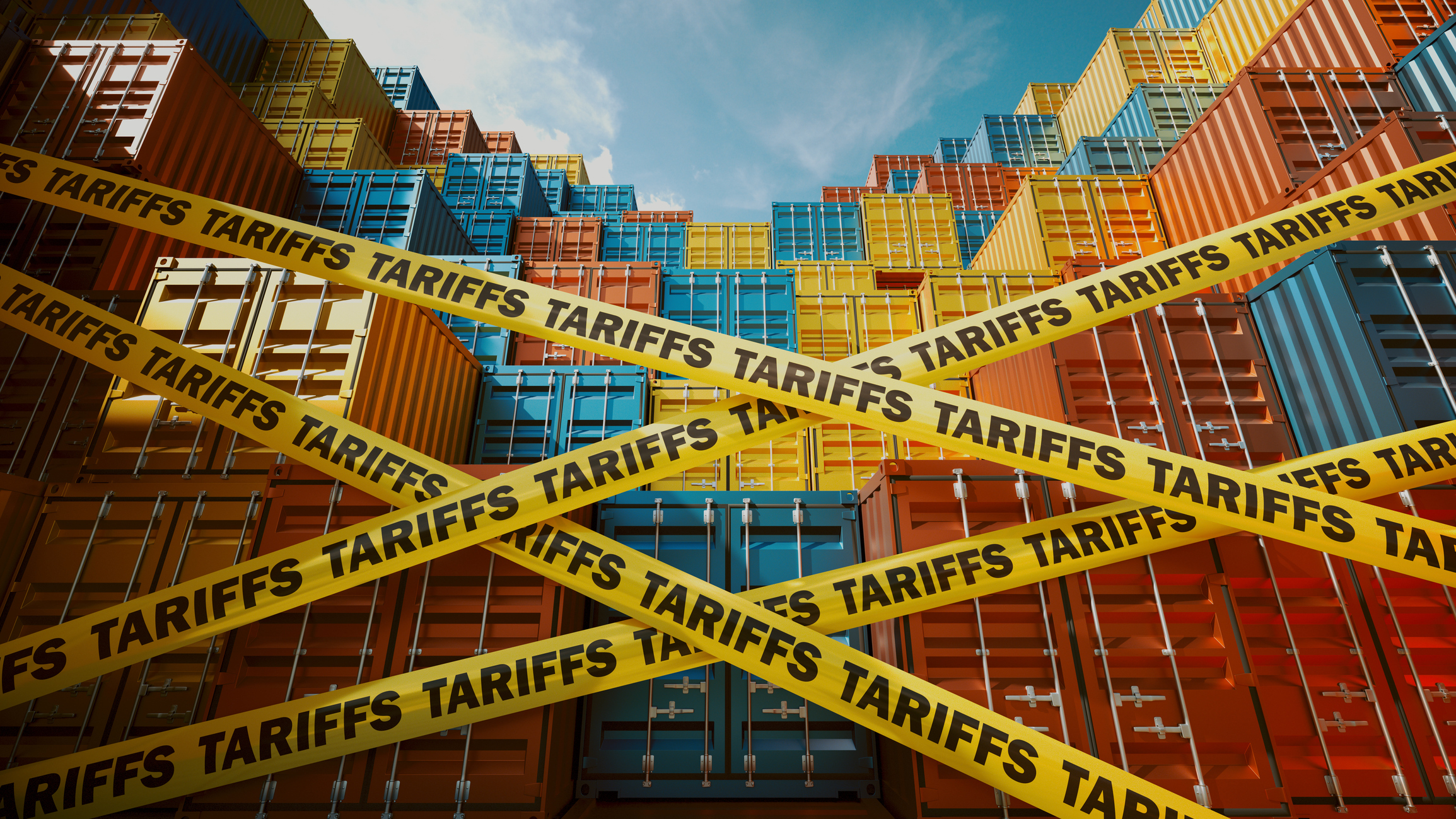
The tariff landscape has shifted. Global trade friction, especially around paper and printing, means that publishers who sourced overseas printing or relied on imported inputs are now running the math again. Domestic printers aren't suddenly the "safe choice" because they feel local; they're the strategic choice because they offer the operational certainty publishers need when tariff swings can pivot unit economics.
Here's what's actually happening, why it matters for your product timeline and costs, and why now is the moment to reconsider where your books get printed.
Tariff exposure lives at every step of your supply chain
Most publishers don't think of tariffs as a direct cost until it's time to bid a reprint but tariff structures create friction at multiple points:
Paper costs shift first. Imported paper, especially specialty grades, arrives with tariff exposure. A fluctuation in tariff rates isn't a $500 adjustment. It can swing margins by 10–15% on large print runs. When a publisher commits to an annual print budget, this volatility makes forecasting a guessing game.
Overseas production faces timing pressure. International print partners are now hedging against tariff swings by shifting inventory forward or locking in pricing windows. That means your printer is holding stock to manage tariff risk, which sometimes transfers to you via tighter minimums or longer pre-payment windows.
Lead times become unreliable. If tariff rates shift mid-production, overseas printers may pause shipments awaiting tariff clarity. You ordered books on a 6-week timeline. Suddenly, it's 10 weeks because tariffs on intermediate inputs spiked. For educational publishers on curriculum cycles, a 4-week slip is a crisis.
Currency fluctuations amplify the effect. Tariffs and currency are linked in ways most publishers don't see. When tariff uncertainty rises, so do currency hedging costs for international printers. That often flows downstream to you.
Nearshoring doesn't solve tariff risk. Some printers offer Mexico or Central America production as a middle ground between overseas and domestic. While shorter shipping distances help, these operations still face tariff exposure on finished goods and intermediate inputs. You inherit the same currency hedging costs and tariff policy tracking burdens.
Your curriculum timeline is hostage to tariff policy
Educational publishing has specific vulnerabilities in a tariff-volatile environment:
Tight inventory windows. You can't stockpile textbooks 18 months out. State adoptions happen on fixed calendars. A district curriculum launch in August means your print has to ship in June, no flexibility. Overseas production delays compound because you have no buffer.
Reprint urgency. When a popular title unexpectedly sells through, you need a reprint in weeks, not months. Domestic production with in-stock paper can handle this. Overseas production requires longer lead times just to navigate tariff clarity and shipping logistics.
Cost pressure from districts. Educational publishers operate on tighter margins than trade houses. A 5% jump in tariff-induced print costs is real margin compression. Publishers then face a choice: eat the cost or raise adoption pricing (which districts resist).
Small-batch economics are harder overseas. Short-run digital and short-run offset work requires agility. Overseas printers handle these efficiently at large scale; at 500–2,000-unit quantities, your tariff burden per unit is actually higher than for large runs, because the fixed tariff cost allocates across fewer units.
Domestic sourcing removes tariff exposure from your equation
A domestic printer with in-stock paper and no overseas exposure gives you three things tariffs remove:
Predictable lead times. When your paper is sourced domestically and your printer isn't waiting for tariff clarity, your reprint window becomes 3–4 weeks instead of 6–8. For educational publishers, that's the difference between hitting a curriculum deadline and missing it.
Transparent cost structure. A domestic printer's margin changes aren't tied to tariff winds. When you negotiate a reprint price, you're paying for print, paper, and overhead. You're not guessing what tariff rate applied when the paper arrived or when the job ships. That price holds.
No currency or hedging risk. You invoice in dollars. Your printer is paid in dollars. There's no tariff-induced FX volatility baked into your cost.
Immediate quality visibility. Domestic production means proofs, press checks, and adjustments happen locally with real-time communication. Overseas production adds a 6-hour time delay and tariff-driven shipping windows that can kill quality iterations.
The real divide isn't about scale
Large, consolidated printers are messaging tariff resilience because they have scale and international footprints to absorb some swings. But scale creates complexity. Tariff uncertainty creates the exact friction that slows large operations down.
Domestic-focused printers are positioned differently. They're not hedging currency or tariff risk. They're removing it entirely. That's a more powerful position than messaging "resilience to tariffs." It's saying tariffs aren't in your equation at all.
For educational publishers, this matters fundamentally. Your print partner's tariff exposure is your tariff exposure. If your printer is waiting for overseas paper shipments to clear tariff delays, you're waiting too.
Four weeks is the difference between winning the reprint and losing it
Here's a concrete example: You've published a new science curriculum and the initial print run ships in May. August enrollment is higher than modeled and you need 2,000 reprints by early November.
With overseas production: You place the order in late August. Your printer requests tariff confirmation (2 weeks). Paper orders take 3 weeks to arrive and clear tariffs. Press setup and production is 2 weeks. Shipping is 2–3 weeks. You're targeting early November; you hit mid-November if you're lucky. The district has already begun using an older edition or competitor material.
With domestic production: You place the order in late August. Your printer pulls stock from in-house inventory (paper is already sourced domestically). Press setup begins immediately. Production is 2 weeks. Shipping is 1 week. You hit early November and own the district's reprints.
That 4-week swing isn't theoretical. It's the difference between capturing the reprint sale and losing market share to someone who could deliver faster.
Where your paper comes from determines your tariff exposure
Paper is the foundation of tariff exposure. Domestic printers who source paper domestically have an immediate advantage:
No tariff delays: Domestic paper doesn't clear ports or tariff lines. It arrives on the truck.
Predictable pricing: Domestic paper mills price on capacity and demand, not tariff rates. Hardcover board from overseas suppliers alone faces 7% tariffs. Domestic sourcing eliminates that entirely.
Stock flexibility: A domestic printer with relationships to domestic mills can pull specialty grades without tariff hedging overhead.
If your printer is sourcing paper overseas, even premium grades from Europe or Asia, you're inheriting tariff exposure, whether you realize it or not. That cost either shows up in your invoice or it's absorbed (which the printer compensates for through higher baseline pricing).
Even equipment investments carry tariff weight. Printing equipment from Europe or Japan faces 15% tariffs. That means a domestic printer's capital costs are lower, giving them more flexibility to invest in capacity without passing tariff overhead to you.
Ask your printer these questions
If you're evaluating print partners or renewing relationships, these questions separate tariff-conscious printers from those who are still hoping tariffs stay stable:
- Where does your paper come from? Fully domestic? Hybrid? If hybrid, which grades come from abroad?
- What's your lead time for a 2,000-unit reprint today? If it's longer than 4 weeks, tariff and overseas sourcing logistics are in your path.
- How do you price reprints? Is pricing locked at order time, or adjusted at shipment if tariffs shift?
- Do you hold in-stock paper for short-run orders? If yes, how much? If you're sourcing to order, tariff delays are built in.
These aren't trick questions. They're the operating questions that determine whether your printer is absorbing tariff risk or passing it through to you.
This is the moment to reset your supply chain
Tariff policy is in flux. That means now is when educational publishers should be resetting their print partnerships. Don't wait for the next tariff swing to force the issue reactively.
A domestic printer with domestic paper sourcing isn't betting that tariffs go away. They're betting that operational clarity is worth the margin investment. And for educational publishers on tight curriculum timelines and cost structures, that bet pays back immediately in predictable reprints and on-time launches.
The window to make this transition is now. Don't let the next tariff surprise lock you into a supply chain that can't flex.