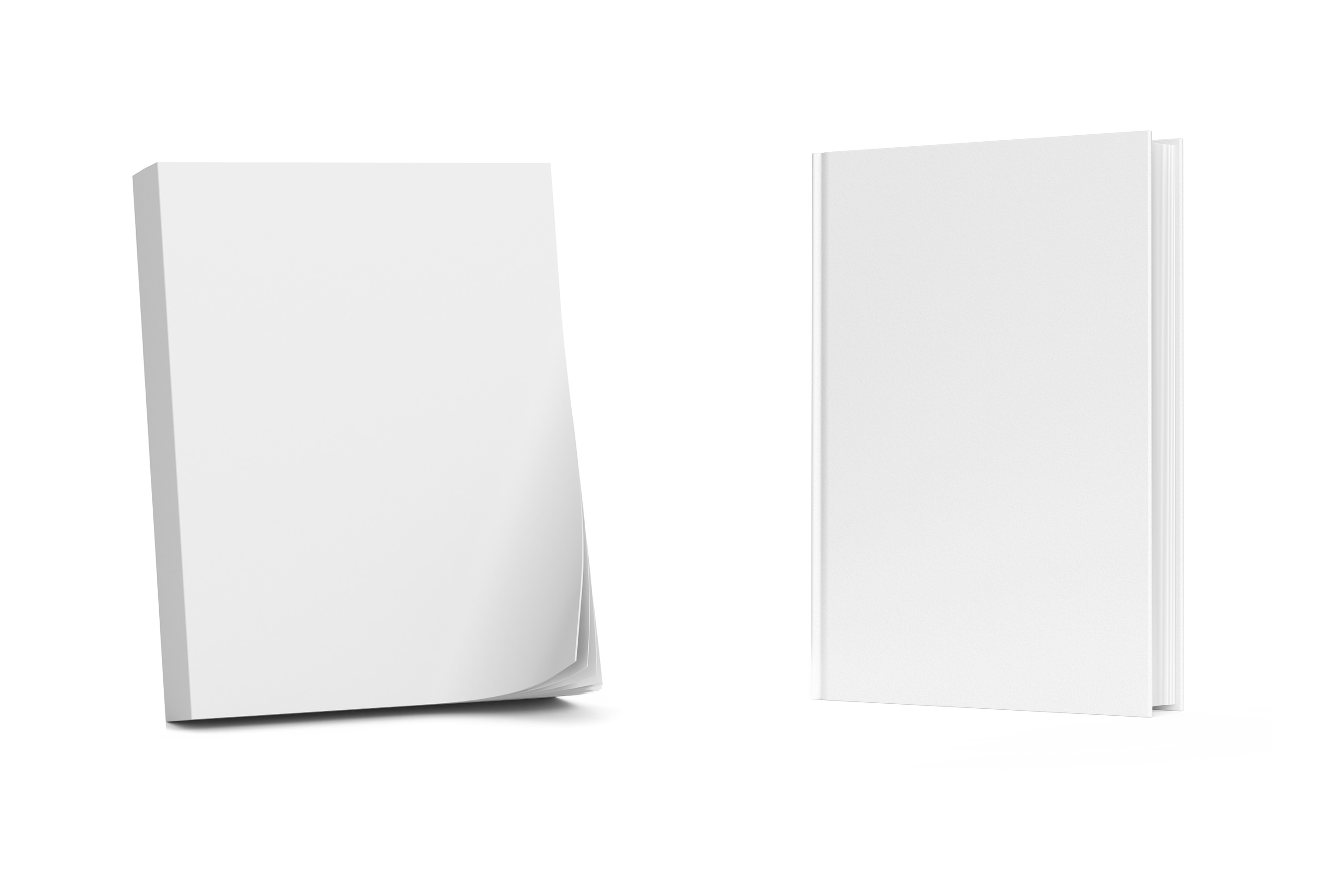
If you're planning a book, one of the first real production decisions you'll run into is this: perfect bound or case bound?
It's not just a matter of style. It affects durability, cost, turnaround time, and how your audience perceives the final product. Let's walk through it in a way that helps you make a decision.
What is perfect binding?
Perfect binding is what most people think of when they picture a paperback book. Pages are stacked together, the spine edge is flat, and everything is glued into a wraparound cover. It's clean, professional, and efficient.
You've seen it everywhere:
- Trade paperbacks
- Catalogs/manuals
- Educational materials
Modern perfect binding, especially when using PUR adhesive, is a lot stronger and more flexible than it used to be. Pages hold up well over time, and the book opens more easily than older versions.
Where perfect binding shines
Perfect binding is usually the right call when:
- You're printing higher quantities
- You need a cost-effective solution
- Speed matters
- The book doesn't have to last forever
It's the workhorse of the print world. Reliable, scalable, and budget-friendly.
What is case binding?
Case binding is your classic hardcover. Pages are sewn or glued into signatures, then attached to a rigid cover made from board and wrapped in cloth or printed paper. This is the version that feels substantial the second you pick it up.
You'll see it in:
- Textbooks
- High-end publications
- Keepsake or gift books
It's built for longevity. These are the books that stay on shelves for years and still look good.
Where case binding makes sense
Case binding is the better fit when:
- Durability is critical
- The book will get heavy or repeated use
- You want a premium, high-value feel
- The content has long-term relevance
If the book is meant to last, case binding is hard to beat.
The real differences that matter
Instead of thinking about this as softcover vs. hardcover, it helps to focus on what actually impacts your project.
- Durability: case binding wins, no question. It's designed for long-term use and handling. Perfect binding has come a long way, but it's not built for the same lifespan.
- Cost: perfect binding is significantly more cost-effective, both in production and shipping. Case binding involves more materials and more steps, which adds up quickly.
- Turnaround time: perfect bound books move faster through production. Case bound books take longer due to the added processes like casing-in and drying time.
- Perception: a case bound book feels premium; it carries weight, literally and figuratively. Perfect bound books feel accessible and practical, and that's not a negative.
So how do you choose?
It really comes down to how the book will be used. If you're producing something that needs to be cost-efficient, easy to distribute, and quick to market, perfect binding is the clear winner.
If you're creating something meant to last, something that people will keep, reference, or even display, case binding is worth the investment.
A good rule of thumb:
- Shorter lifecycle, higher volume → perfect binding
- Longer lifecycle, premium positioning → case binding
Both options are widely used for a reason, and there's no one-size-fits-all. But if you step back and think about durability, budget, and how the book will live in the real world, the right choice usually becomes obvious pretty quickly.
And if you're still on the fence, that's where a good print partner comes in. They'll look at your specs, timeline, and goals to help you land on the option that makes the most sense for your project.